Green Roofs meet Solar
My recommendation: benefit from a free, joint experts-led Publication.
Free access!
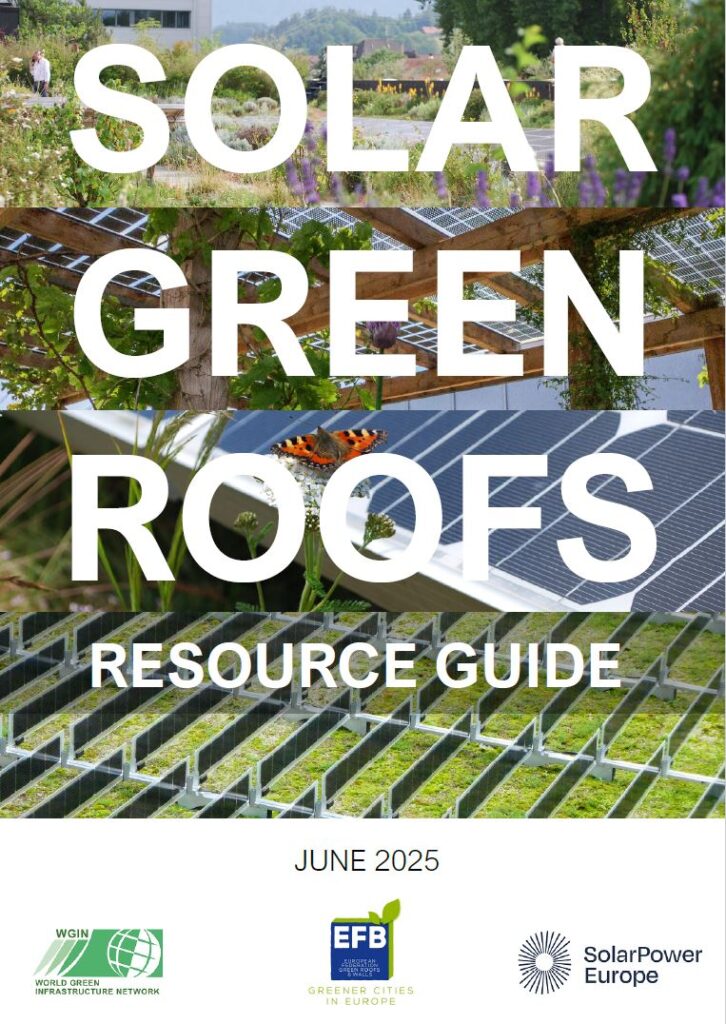
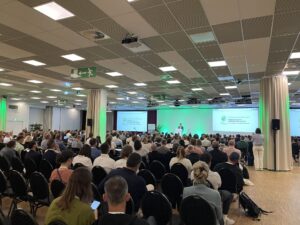
On the World Green Roof Day, at the World Congress of Green Roofs and Walls 2025 in Basel the new Solar Green Roofs Resource Guide was presented. The World Green Infrastructure Network (WGIN), the European Federation of Green Roofs & Walls (EFB) and Solar Power Europe (SPE) have identified a need to inspire public authorities to develop policies and programs that support the more rapid increase in the design, implementation and maintenance of solar green roof solutions.
Why choose between climate resilience and clean energy, when we can have both?
To scale these technologies, supportive policies combined with industry capacity building are needed to fully exploit their many benefits. More investment and policy support, particularly from senior levels of government, is needed. We need not choose one technology over the other. Integration allows us to use limited roofspace in our cities for even greater benefits for citizens, building owners and urban biodiversity.
The guideline provides practical information on integrated solar green roof best practices, design considerations, policies, project case studies and resources. This is document can be downloaded for free and adresses the construction industry, designers, manufacturers and public authorities so that they can understand the opportunities involved and take action to combine these technologies.
Are you ready to transform your city, enhance sustainability, and create greener, more energy‑efficient buildings?
Discover the groundbreaking potential of integrated solar green roofs with our comprehensive Solar Green Roofs Resource Guide.
Inside, you’ll discover how solar green roofs offer a multitude of benefits, including:
- Climate Resilience: Combat heat waves, droughts, and storms while cooling overheating cities and reducing the urban heat island effect.
- Enhanced Biodiversity: Support urban ecosystems and combat the loss of natural spaces in cities.
- Sustainable Energy & Efficiency: Generate renewable electricity, reduce greenhouse gas emissions, and improve building energy efficiency by minimizing heat loss and gain.
- Improved Urban Environment: Enhance air quality, manage stormwater effectively, and contribute to overall human health and well-being.
- Economic Advantages: Explore the economic benefits and potential return on investment of these integrated systems.
- Practical Guidance: Gain insights into best practices for design, implementation, and maintenance, along with relevant policies and regulations.
- Innovation & Job Creation: Learn about the lifecycle benefits, including extending waterproofing system duration, and the creation of green jobs.
Table of Contents (100 pages)
- Introduction- a holistic approach
- Technology Overview
- Green Roof Technologies
- Solar Energy Technologies
- Benefits of sustainable Rooftop Solutions
- Design and implementation considerations
- Planning
- Layout and Installation
- Maintenance
- Challenges and Trade-offs
- Cost factors and Market Trends
- Regulations and policies
- Case Studies (8)
- Summary