World Congress on Building Greening 2026 and EFB Annual General Meeting in Berlin

More than 600 experts gathered in Berlin to shape the future of building greening in Europe

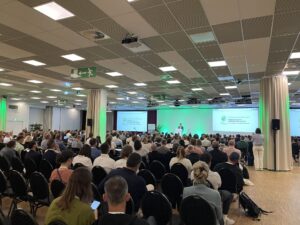
June 2026 was an exciting month for the European green building and Nature-Based Solutions community. Following World Green Roof Day, more than 600 participants from around the world met in Berlin for the World Congress on Building Greening 2026, organised by the German Green Building Association (BuGG). The event brought together researchers, policymakers, industry representatives, public authorities and practitioners to exchange knowledge, showcase innovation and discuss the future of green roofs, living walls and building-integrated Nature-Based Solutions.

Over three intensive days, participants explored topics such as biodiversity, water management, climate adaptation, carbon neutrality, urban resilience, artificial intelligence, circular economy approaches and innovative technologies for greening buildings. The programme included keynote speeches, technical sessions, panel discussions, exhibitions, networking activities and site visits to exemplary projects across Berlin.

I was pleased to contribute as a speaker and discussion leader, presenting the GoNaturePositive! Green Building Industry Roadmap 2050 and moderating discussions on „From Policy to Practice“, focusing on how European policies can accelerate the implementation of green infrastructure solutions in cities and regions.

The congress also highlighted the growing importance of European cooperation. Experts from across Europe and beyond shared experiences on green roof markets, innovative financing models, biosolar roofs, water-sensitive urban design, biodiversity enhancement and climate-resilient urban development.

EFB Annual General Meeting 2026

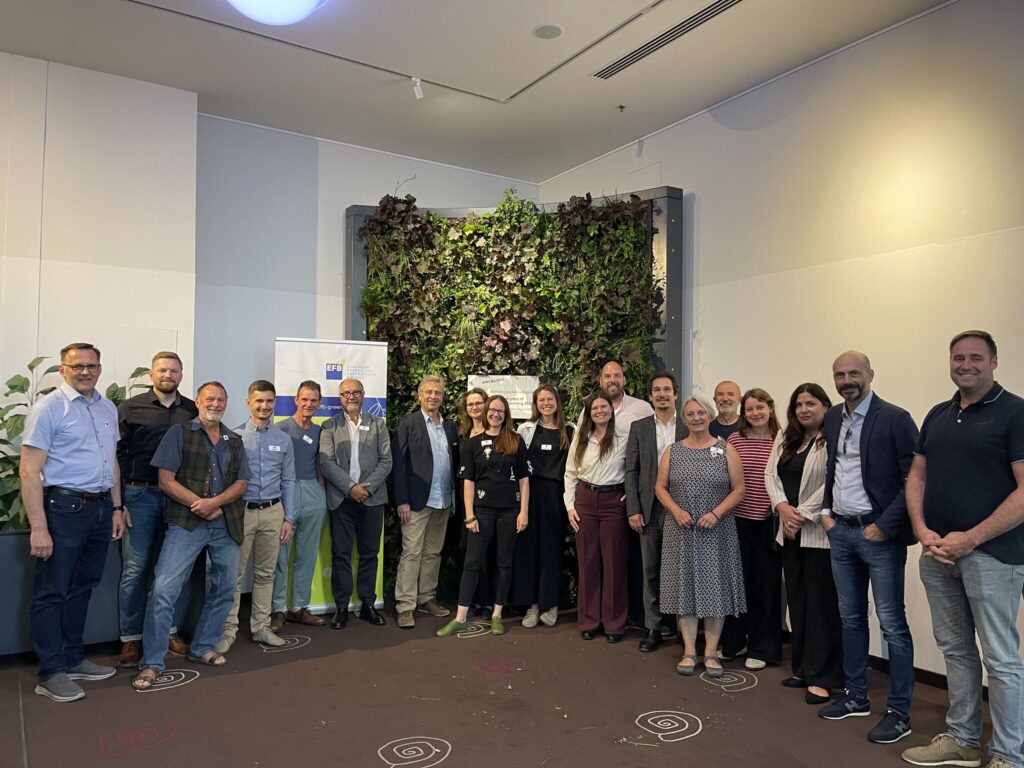
Alongside the congress, the European Federation of Green Roof and Living Wall Associations (EFB) held its Annual General Meeting on 8 June 2026.

Representatives from across Europe reviewed achievements of the past year, discussed strategic priorities and agreed on actions for the coming period. The federation also welcomed new members from Latvia and Montenegro, further strengthening the European network for building greening and Nature-Based Solutions.

The current EFB Board, elected in 2025, continues its mandate for the 2026/2027 period. I am proud to continue serving as Vice-President of the EFB, representing Austria together with the Austrian Green Roof and Living Wall Association (VfB) and GRÜNSTATTGRAU.

An important part of the discussions focused on the future development of the European green building sector, including the EFB Roadmap for the Green Building Industry in Europe and ongoing activities under the GoNaturePositive! project. The positive energy, strong collaboration and growing network demonstrate the increasing relevance of building greening for achieving European climate, biodiversity and sustainability goals.

A heartfelt thank you goes to the entire BuGG team, the EFB office, all organisers, speakers and participants who made this event such a success.

Berlin clearly demonstrated that green roofs, living walls and building-integrated Nature-Based Solutions are no longer niche solutions—they are becoming an essential component of resilient, healthy and climate-adapted cities.

Category: EU

Tags: World Congress on Building Greening, EFB, Green Roofs, Living Walls, Nature-Based Solutions, Urban Green Infrastructure, Climate Adaptation, Biodiversity, GoNaturePositive!, Sustainable Buildings, Urban Resilience, Berlin 2026.
Why greening is so effective

All four EU laws point to a shared challenge: cities are overheating, losing water, suffering from air pollution, and facing declines in biodiversity. Green infrastructure addresses all of these issues simultaneously. Studies compiled by the EFB in 2025 show:

  • Energy: Green roofs and façades reduce heat gains in summer, lower cooling demand, and improve winter insulation.
  • Water: Advanced Retention roofs can locally retain up to 100% of rainfall.
  • Biodiversity: Species‑rich green roofs and façades support wild bees, beetles, birds, and diverse plant species.
  • Urban climate: Vegetation cools surfaces, reduces heat islands, and improves outdoor comfort.

Discover the legislative pathways here:

EED: Saving energy through vegetation

The public sector must reduce its annual energy consumption by 1.9% starting in 2025. Additionally, the Member States’ energy‑saving obligations will rise significantly from 2024 onwards. Green roofs and green façades are among the most effective, durable, and verifiable measures: they reduce summer overheating, improve winter insulation, reduce the burden on heating and cooling systems, and provide benefits over decades. Depending on climate zone, studies show winter energy savings of 10–30% and up to 90% in summer.

EPBD: Solar obligations and building renovation as an opportunity for green roofs

The revised Energy Performance of Buildings Directive requires Member States to gradually install solar energy systems on almost all building types – starting in 2026 with new public non‑residential buildings and from 2030 onwards also on existing buildings over 250 m² of usable floor area. Crucially, the directive explicitly demands an assessment of whether roofs are suitable for combining photovoltaics with vegetation. Such biosolar roofs improve PV performance, cool modules and roof surfaces, extend system lifetimes, and create valuable habitats.

The EPBD also sets strong impulses in the building stock: by 2030, the 16% worst‑performing non‑residential buildings must be renovated, rising to 26% by 2033. For residential buildings, primary energy consumption must drop by 16% by 2030 and 20–22% by 2035. Green roofs and façades are recognised as effective measures to reduce heating and cooling demand.

UWWTD: Retaining water instead of
overloading systems

The new EU Urban Wastewater Treatment
Directive revolutionizes the way cities manage rainwater. From 2028 onwards,
Member States must identify which cities require integrated rainwater
management plans due to overflow events, pollution, or climate‑related risks.
These plans must prioritise green and blue infrastructure – systems that store,
delay, evaporate, or locally reuse rainwater. Green roofs, retention roofs,
rain gardens and green façades thus become binding planning instruments that
help prevent flooding and significantly reduce pressure and costs in sewer
systems.


NRR: No net loss of urban green space from 2030

The new Nature Restoration Regulation introduces binding targets for urban ecosystems. From 2030 onwards, Member States may not allow any net loss of urban green space; from 2031 onwards, the total area of urban green must increase. Innovative and important: building greening is explicitly recognised as a means to achieve these targets. Green roofs and façades close spatial gaps, connect habitats, and create stepping‑stone environments for pollinators.